Dr. Gymbro
←

#crossover study

1 article
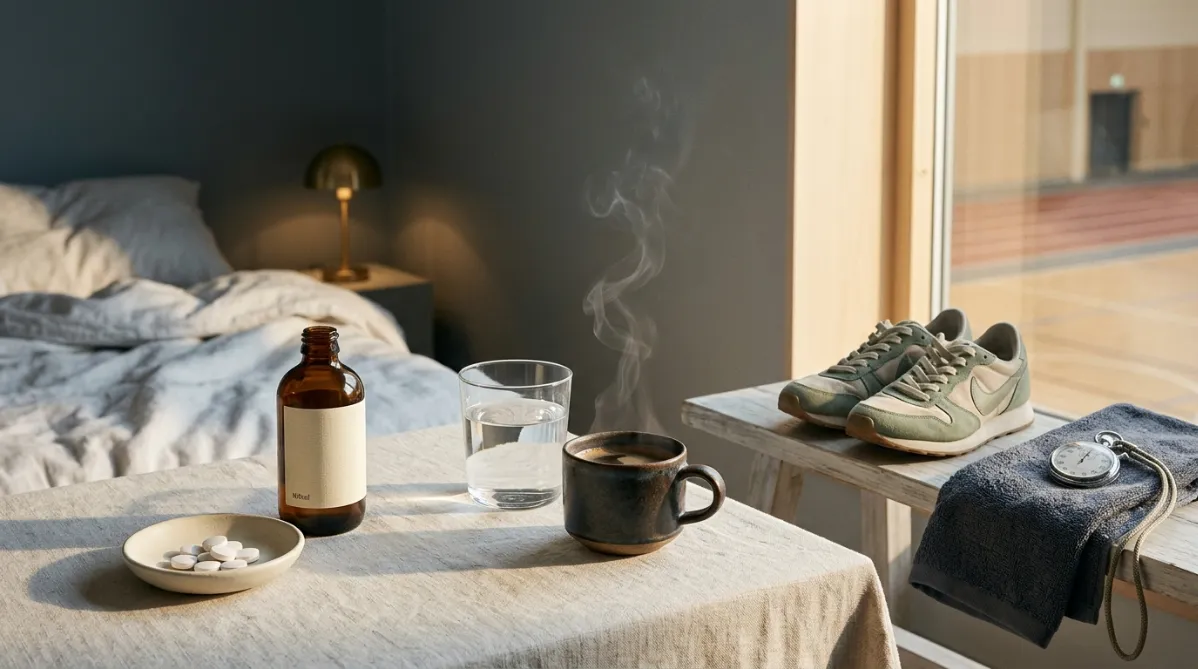
A quiet, sunlit editorial still life on a pale oatmeal linen surface, shot from a slightly elevated three-quarter angle with soft morning window light raking in from the left. On the left side, a small matte ceramic dish holds a few white round tablets, next to a minimalist amber glass bottle with a blank cream label. In the center, a slim glass of water sits beside a handmade stoneware espresso cup filled with dark coffee, with a thin ribbon of steam curling upward. On the right, a pair of worn but clean sage-green running shoes rests on a pale wooden bench, with a folded charcoal athletic towel and a stainless steel stopwatch beside them. The background is softly blurred: a calm bedroom-to-morning transition, with the left third of the frame in cool, dusky blue-gray tones suggesting night, with rumpled white bedding and a small bedside lamp glowing dimly. The tones then blend gradually across the frame into warm golden peach morning light on the right, where a blurred indoor court or track line is faintly visible through a tall window. The color palette is muted and modern: warm cream, soft sage, dusty blue, terracotta accents, and hints of amber. Delicate shadows, shallow depth of field, fine natural film grain, and generous negative space across the top of the frame for headline text. The mood is calm, precise, and thoughtful, in the style of a contemporary wellness and science journal photograph, clean and minimalist with tactile textures of linen, ceramic, glass, and wood.
nutrition

Melatonina y luego cafeína: solo la combinación reduce los marcadores de daño muscular

BY DR. GYMBRO ·

La cafeína hizo que hombres entrenados corrieran más lejos en una prueba de shuttles, pero solo la combinación melatonina + cafeína también redujo los marcadores de daño muscular e inflamación. El protocolo consistió en 6 mg de melatonina antes de acostarse y 3 mg/kg de cafeína una hora antes de la prueba. La melatonina no modificó el sueño medido, lo que hace el resultado aún más curioso. El estudio fue un pequeño cruce con 14 hombres entrenados y una única prueba de rendimiento, por lo que los hallazgos son preliminares. A continuación se muestra lo que se probó, a quién podría interesar y lo que no demuestra.

This page is available in